
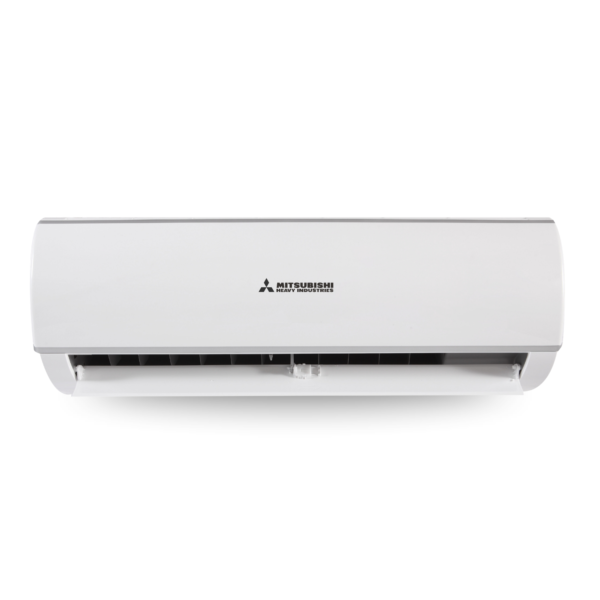
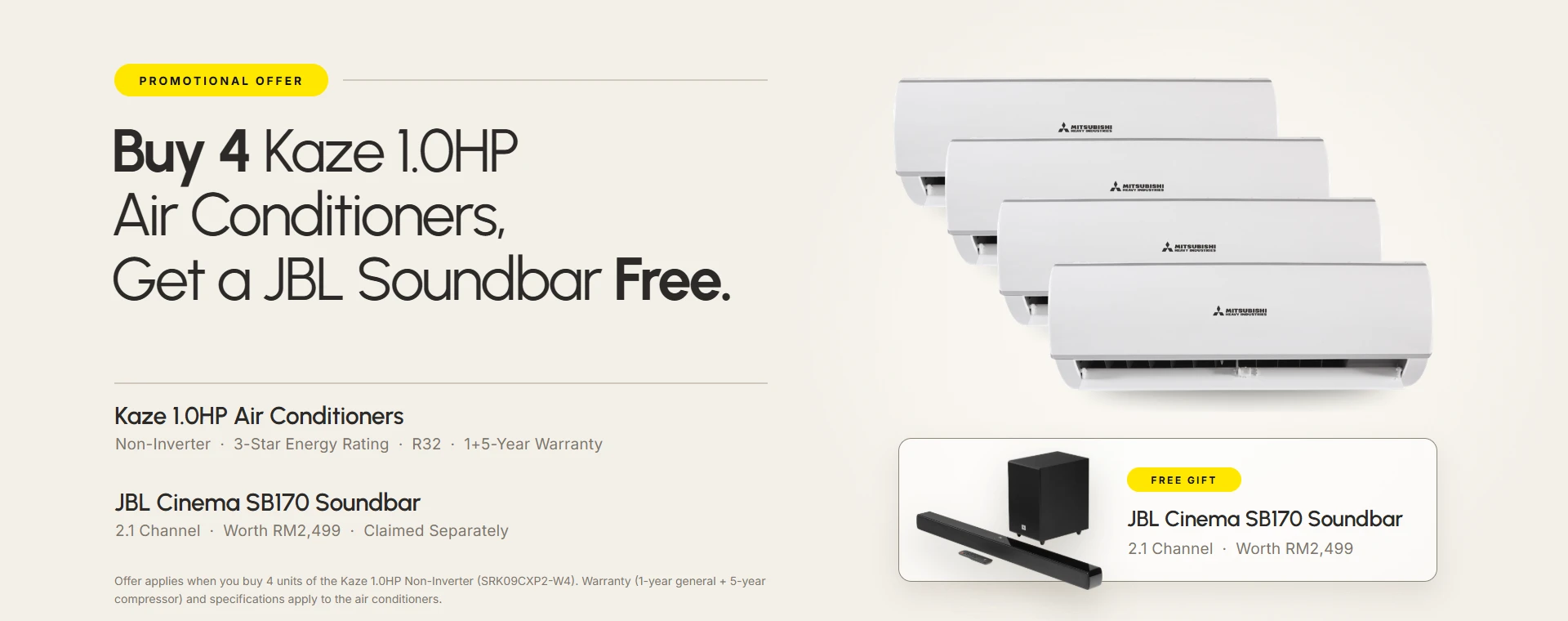
 Kaze
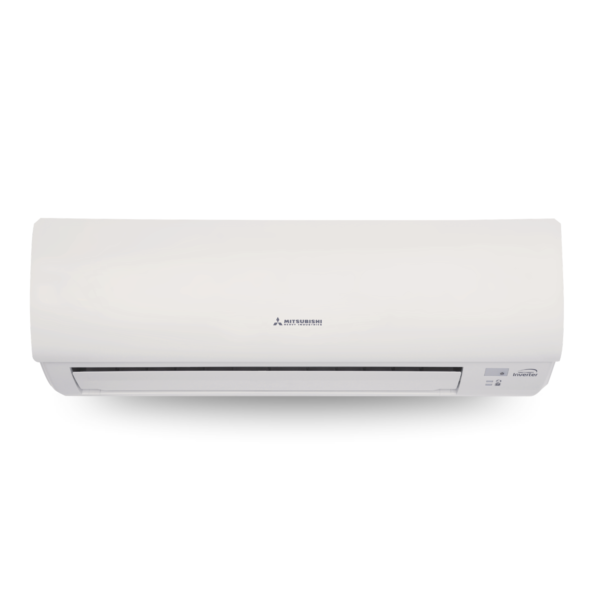 Hoshi
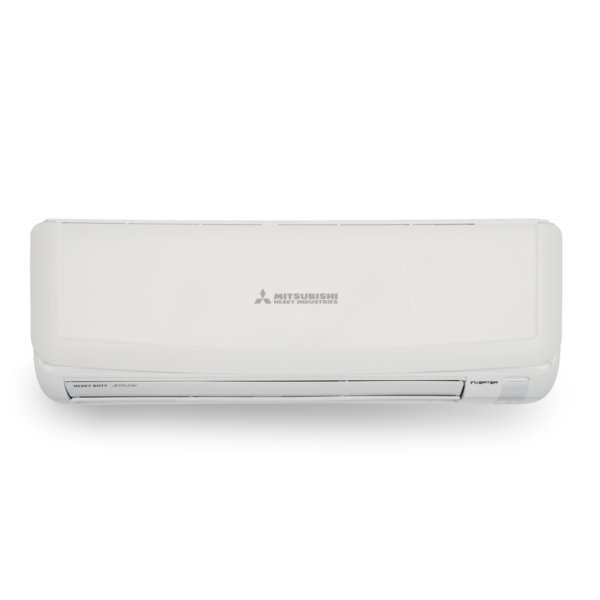 Aki

Not sure which HP?
Pick your room and we'll show the right horsepower.
A sizing guide, not a site survey. Ceiling height, sun exposure and how many people use the room all affect the result.
Inverter vs Non-Inverter
An inverter varies its compressor speed. A conventional non-inverter switches fully on and off. Here's what that changes — and which suits your room.
Room Temperature Over Time
Illustrative — how each compressor type behaves at a 25°C setpoint. Not measured performance data.
Compressor Output
Illustrative — percentage of maximum capacity over the same two hours. Not measured performance data.
Lower running cost
An inverter varies compressor speed, drawing only what the room needs instead of running at full power and shutting off.
Steadier temperature
Variable speed holds the setpoint more closely, rather than overshooting cold and drifting warm between cycles.
Quieter operation
Lower compressor speeds mean less noise. Hoshi reaches 21 dB(A) and Aki 20 dB(A) at their quietest setting.
Both charts are illustrations of compressor behaviour, not measurements. Every figure quoted above is from a Mitsubishi Heavy Industries specification sheet for a unit we sell. Star ratings are issued by Suruhanjaya Tenaga.
Running Cost Calculator
See roughly what a unit adds to your monthly electricity bill before you buy.
Inverter units slow down once the room is cool, so real use is usually lower than this figure. Treat it as the most you would pay.
View Kaze 1.0HPEstimate, not a bill. How this is worked out
It multiplies the unit's rated power input (from the MHI spec sheet) by the hours and days you choose and the electricity rate. Real use varies with outdoor temperature, room insulation, the temperature you set, how often doors open and how the unit is serviced. Inverter models (Hoshi and Aki) slow down once the room is cool, so they normally use less than their rated input: treat their figures as an upper bound.
The default rate is the TNB domestic base tariff of about RM 0.44/kWh (structure effective 1 July 2025). It leaves out the monthly AFA fuel adjustment and any rebates or incentives. For a closer figure, enter the rate from your own TNB bill.
Engineered by MHI
Technologies developed for industrial and marine applications, refined for your home.
Every MHI unit's air channel is shaped using the fluid mechanics simulation MHI's aerospace division uses to design jet turbine blades — built for maximum airflow with minimum power.
MHI's story began over a century ago building ships and marine engines in Nagasaki. That same engineering culture carries through every division today, including outdoor units built to withstand Malaysia's heat and humidity.
From jet engine components to power turbines, MHI applies the same disciplined standards across every division — a culture of precision that shapes how every air conditioner is designed, tested and built.
From Order to Cool in 3 Simple Steps
Order Confirmed
Place your order online. Our logistics partner contacts you directly, typically within 2 business days, to coordinate your delivery.
Unit Delivered
Your Mitsubishi Heavy Industries air conditioner arrives on your chosen date, carefully packaged.
Engage Your Installer
Choose your preferred certified installer. Our service partners may also offer this service independently.
Side-by-Side Comparison
Specifications from the Mitsubishi Heavy Industries CXP2, YYF and YYM series sheets. Star Efficiency ratings are issued by Suruhanjaya Tenaga. Prices are live from this store. Kaze is rated by CSPF and the inverter series by COP — these are measured differently and are not a single scale. CSPF averages performance across a cooling season at varying load; COP is measured at one rated condition. The Star Efficiency rating is the row to compare across series.